

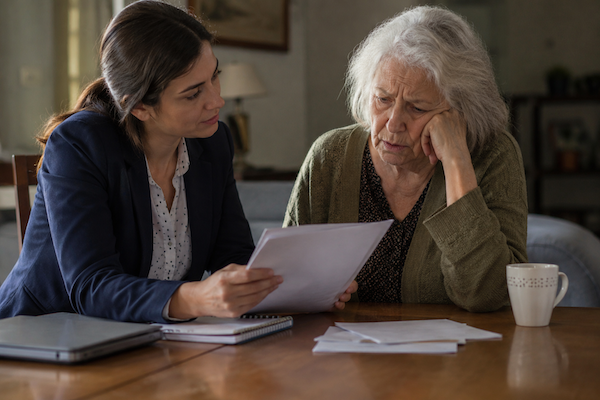
California law defines elder neglect as the failure of any person having the care or custody of an elder to exercise that degree of care which a reasonable person in a like position would exercise. Under the Elder Abuse and Dependent Adult Civil Protection Act (EADACPA), this failure typically manifests as a refusal or omission to provide necessary medical care, nutrition, hydration, hygiene, clothing, or shelter. It also includes the failure to protect an older adult from health and safety hazards.
When a long-term care facility, such as a nursing home or assisted living center, accepts a resident, it assumes a legal custodial duty. Neglect in these institutional settings is rarely an isolated mistake by a single caregiver. Instead, it is almost always the direct result of systemic corporate decisions, such as chronic understaffing and intentional underfunding, which make proper care virtually impossible.
- Statutory Definition: California Welfare and Institutions Code Section 15610.57 codifies neglect as the failure to provide the care, goods, or services necessary to avoid physical harm or mental suffering.
- The Custodial Trigger: Legal liability hinges on the existence of a care or custody relationship, which is automatically established upon admission to a licensed care facility.
- Corporate Accountability: Institutional neglect is typically driven by administrative cost-cutting and insufficient staffing ratios rather than simple employee oversight.
- Civil Protection Act Remedies: Proving reckless neglect under EADACPA allows families to pursue heightened remedies, including attorney’s fees and damages for pain and suffering even after the resident has passed away.
The Legal Framework: Welfare & Institutions Code Section 15610.57
To hold a care provider accountable, it is necessary to look closely at how California separates ordinary negligence from statutory elder neglect. Ordinary negligence involves a brief lapse in judgment or an accidental oversight. Statutory elder neglect, conversely, involves a sustained, systemic failure to meet basic human needs.
The California Legislature enacted specific protections to shield adults aged 65 and older from these systemic failures. Under Welfare & Institutions Code Section 15610.57, the legal definition spans several distinct categories of deprivation:
- Failure to assist in personal hygiene: Allowing residents to remain in soiled clothing or bedding, which rapidly leads to skin breakdown and severe infections.
- Failure to provide medical care for physical and mental health needs: Ignoring changes in a resident’s baseline condition, withholding prescribed medications, or failing to call a physician when acute symptoms arise.
- Failure to protect from health and safety hazards: Leaving a high-fall-risk resident unmonitored or failing to implement required safety protocols, resulting in preventable fractures or head trauma.
- Failure to prevent malnutrition or dehydration: Failing to assist residents who cannot feed themselves or ignoring physician-ordered dietary plans.
Stebner, Gertler, & Guadagni approaches these cases by analyzing the breakdown in the chain of command. When a facility consistently fails to meet these statutory requirements, the evidence usually points directly to corporate management prioritizing profit margins over resident safety.
Elements Required to Prove Institutional Elder Neglect
Successfully litigating an elder neglect claim in California requires establishing specific legal thresholds. A plaintiff must demonstrate by a preponderance of the evidence that the defendant had care or custody of the elder, that the defendant failed to provide reasonable care, and that this failure caused substantial physical or financial harm or mental suffering.
| Custodial Relationship (Admission or Agreement) |
→ | Failure to Provide Reasonable Care (Statutory Omission) |
→ | Proximate Cause (Physical Harm or Mental Suffering) |
When the objective is to recover heightened remedies under EADACPA—such as punitive damages or the recovery of pre-death pain and suffering damages—the burden of proof rises. The plaintiff must prove by clear and convincing evidence that the facility’s management was guilty of “recklessness, malice, fraud, or oppression.”
Recklessness is demonstrated when a corporate operator knows that understaffing creates a high probability of severe harm to residents but consciously chooses to maintain those low staffing levels to maximize profits. This is not a simple accident; it is a calculated business practice.
Systemic Root Causes of Nursing Home Neglect
Institutional neglect is rarely a localized failure of an individual nurse or certified nursing assistant (CNA). The employees on the floor are frequently left to manage an impossible number of residents because corporate executives restrict labor budgets.
Chronic Understaffing
When a single CNA is assigned to care for fifteen or twenty high-acuity residents simultaneously, basic care tasks become impossible. Residents are left waiting for hours for assistance to use the restroom, leading to unassisted falls or prolonged exposure to human waste.
Inadequate Training and Supervision
Facilities looking to cut costs often hire inexperienced staff or fail to provide proper training on critical care protocols. Without proper oversight, staff may fail to recognize the early stages of a pressure ulcer or mismanage transfer techniques, causing severe fractures.
Failure to Monitor and Document
California regulations require precise documentation of a resident’s daily care, nutritional intake, and medical status. When a facility falls into severe neglect, documentation becomes erratic, missing, or fraudulent. Gaps in medical charts frequently serve as a primary indicator that a facility is hiding a failure to provide care.
Immediate Actionable Steps for Families
If you discover that an older adult is experiencing substandard care or showing signs of decline in a California facility, documented action must be taken immediately to protect them and preserve essential evidence.
- Document Everything Extensively: Photograph any physical signs of neglect, including pressure ulcers, unexplained bruising, unkempt appearances, or unsanitary room conditions. Maintain a detailed log of dates, times, names of staff members spoken to, and the specific responses provided.
- File an Official Complaint with CDPH: The California Department of Public Health (CDPH) is responsible for licensing and regulating health facilities. Filing a formal complaint triggers a state investigation and an unannounced site visit. The resulting state citation profile serves as powerful independent evidence in a civil lawsuit.
- Contact the Local Long-Term Care Ombudsman: An Ombudsman is an independent advocate who investigates resident complaints within long-term care facilities. They can conduct unannounced visits to observe conditions and interview staff.
- Report to Adult Protective Services (APS): For neglect occurring outside of licensed medical facilities or requiring immediate emergency social services intervention, a report should be filed with the local county APS agency.
Seeking Trial Accountability
Resolving an elder neglect case requires an understanding of how corporate defendants operate. Many firms handle these cases with the goal of securing a quick, quiet settlement that allows the facility to continue its business practices without making meaningful structural changes.
Stebner, Gertler, & Guadagni operates differently. As peer-recognized trial lawyers, the firm builds every case with the expectation of going to trial. Corporate operators evaluate claims based on the willingness and ability of opposing counsel to present a case to a jury. By thoroughly investigating corporate financial structures, staffing records, and historical regulatory violations, the firm forces institutional defendants to face genuine accountability for the harm caused by systemic neglect.
If a family member has suffered severe harm, a permanent injury, or wrongful death due to institutional neglect, a formal case evaluation can help clarify your options. A confidential review of medical records and facility history can determine whether the injuries are the result of actionable corporate misconduct.